
The Placebo Effect: Boost Your Healing Response Naturally with Tara Springett • Ep 71
Fake knee surgery healed patients just as well as the real thing. That's not folklore, it's documented clinical research on the placebo effect. Psychotherapist and author Tara Springett joined me to share how belief, expectation, and even the words we use about our own bodies can shape physical healing.
What Is the Placebo Effect, Really?
The placebo effect means that when we believe something will make us healthy, we have a much higher likelihood that it actually will. This applies even to prescription drugs. When we believe in a treatment, we can experience fewer side effects because the medication works better. This is a well known phenomenon that the medical establishment recognizes. It's not some fringe or esoteric idea, even though at the end of the day, it can feel a little mysterious. What is it, really, that makes us healthy?
The placebo effect has a lot to do with what we believe. When we believe something will make us better, it doesn't matter whether it's Western medicine, Qigong, Ayurveda, or even a sugar pill. If we believe it will help us, the chances that it will help us are higher, because our body and our mind become part of the healing process. The real work is finding a way to induce a deep belief in us that we will be healed.
Minimizing stress and maximizing positive expectancy creates the optimal environment for our biology to do its job. It would be incredible if we could harness more of this self-healing power. The placebo effect is really just our mind-body connection in action, and it can work against us too if we're constantly caught up in fearful thoughts around not being healed.
How Fear Works Against Us
What Tara described next is actually known in clinical research as the nocebo effect. It's the frustrating reality that negative expectations can cause us to experience actual physical side effects or increased pain. Think about people who are afraid of prescription drugs and avoid seeing a doctor because they're convinced the medication will make them feel terrible and cause every possible side effect. Chances are, they'll experience more side effects, not fewer, because that fear becomes part of the equation.
The Research: Sugar Pills & Fake Knee Surgery
There are studies where researchers test whether a new medicine works using a blind study. Half the participants get the actual pill, and the other half get a sugar pill, and then the results are compared. Every time, there are people who took the fake drug, just the sugar pill, and still experienced scientifically measurable benefits.
One of the most fascinating studies I've come across is about fake knee surgery. Some patients received the actual surgery, and others didn't. The patients who didn't get surgery still had a small scar and went through the same recovery protocol as the patients who did get the procedure. They reported feeling great and back to normal, even though they never had surgery at all. It was entirely in the mind, because they expected the surgery to help them, and that expectation shaped their outcome.
The question isn't whether the placebo effect exists. We know it does. The question is whether we can intentionally work with it instead of accidentally working against it. Even something like visiting an energy healer, a reiki practitioner, or a sound healer works better when you genuinely believe in the effectiveness of that modality.
Choose the Healing Modality You Believe In Most
This is one of the most practical takeaways from our conversation. We should choose the modality for healing in which we believe most deeply. If you trust conventional Western medicine, go to a doctor and follow their guidance. If you feel strongly that you can't take prescription drugs and you'd rather see a homeopath, then as long as you don't have a life threatening illness, going to a homeopath gives you a real chance at healing there. If you believe in Qigong, find a Qigong teacher and follow their instruction. Whatever you believe in gets the extra benefit of that belief supporting your healing.
Of course, when we're dealing with a chronic disease, it can be incredibly hard to believe in any kind of medicine, especially if we've already tried everything. Western medicine, complementary medicine, homeopathy, and more, and it all seemed to fail. It becomes very difficult to trust that we can get better. When you're dealing with a chronic, long term illness, simply having belief can feel impossible. Your trust has been broken. But we can bypass a mind that's tired of hoping. We can use our imagination as a back door to healing, even when our conscious mind is skeptical.
How to Maximize the Placebo Effect
Tara shared a visualization technique that can help maximize the placebo effect, and it's simple: visualize yourself happy and healthy. Close your eyes. Imagine you're dancing through a flower meadow, and your painful knees are fine. Your arthritis is gone. Your pain is gone. You are slim and energetic, and your body is wonderful and flexible, able to dance and skip. You immerse yourself fully in this imagery.
The interesting thing is that the mind doesn't know the difference between something you're actually experiencing and something you're vividly imagining. It's all the same to the mind, whether you do it in reality or purely in your imagination.
While your conscious mind knows it's an exercise, mental imagery can still activate many of the same neural pathways involved in actual experiences. Visualization may also help shift the nervous system out of a constant state of stress, which is another reason practices like this may feel supportive.
By immersing yourself in these visualizations, you give your mind a powerful blueprint of what it should aim for. You don't have to visualize with perfect clarity, that's just a word. You simply imagine it. At some point, you forget you're even doing an exercise, and you spend however long, maybe fifteen minutes, having essentially been healthy in your mind. You've given your body the sign, the blueprint, of what it should aim for. And because of that, the likelihood that you get healthier and better is much higher, because you've given yourself the information: I am well. I'm fine. There's nothing to fix.
Try This Visualization Exercise
If you'd like to try your own version of this, here's what you can do. Find a quiet spot where you won't be interrupted, silence your phone, and get comfortable, sitting or lying down, whatever feels natural.
Close your eyes and think about what your life would look like if you weren't experiencing whatever your current symptoms are. What would you be doing? How would you be feeling? Don't just think it, try to feel it. What does it feel like to move without pain, or wake up with energy, or breathe easily? Let yourself experience that with your imagination. Stay with it for ten to fifteen minutes if you can, and try to do it daily, especially if you're dealing with something ongoing.
This isn't just wishful thinking. There's real research on mental imagery changing how the brain processes pain. Researchers think mental imagery activates many of the same brain networks involved in actual movement, emotion, and pain processing. Athletes have used visualization for decades to improve performance, and similar techniques are now being studied for chronic pain and rehabilitation.
Tara also addressed a common concern with this exercise: isn't it unrealistic? Doesn't it nurture some kind of false fantasy? Not really. We're aware we're doing an exercise, an exercise to increase the placebo effect. But while we're doing it, hopefully we forget about that for a while. Once we're finished, we of course realize it's time to take medication or do whatever our doctor has recommended, and we continue doing that. But hopefully, we improve much faster than expected along the way.
I want to point out something important here. The placebo effect isn't about pretending an illness doesn't exist. It's about recognizing that our expectations, stress levels, emotions, and beliefs influence how our brain and body respond to treatment. The goal isn't to replace medical care, it's to create the most supportive mental environment possible while receiving professional medical care.
Research on expectancy, stress, and recovery suggests that when we feel hopeful instead of helpless, our nervous system, hormones, and even our perception of pain can change. That doesn't mean positive thinking cures disease, but it does suggest our mental state may influence how we experience treatment and recovery.
Watch How You Talk About Illness
There's another piece to increasing the placebo effect, and it's about watching how we speak about our illnesses. This is very important. For example, saying "my headaches are killing me" sends a certain kind of information to our body, and it's not a good one.
Tara recommends saying something like "I had some pain this morning" instead of just "my headache," as if it's a possession that's now forever attached to us. We should try to avoid exaggerated phrases like "it's killing me" or "my knees are shot." Think about that phrase for a second, my knees are shot, as if someone literally took a gun and shot them. These are quite negative words and images that we use without even realizing it.
Tara acknowledged that she's had periods in her own life with chronic illness, and it's natural to feel angry about it and want to express that somehow. You want to let off some steam, and you might say something like "my so-and-so is driving me mad." Sometimes we need to let off steam and moan a little, and that's completely human. It's not about forcing positivity all the time.
But we can try not to exaggerate, and we can try not to claim ownership over the illness by calling it "mine."
I want to be clear that Tara isn't suggesting toxic positivity or pretending you aren't suffering. She's talking about the language we repeat dozens of times a day. If our brain is constantly hearing "my broken back" or "my terrible knees," it's worth asking whether those words are helping us heal, or simply reinforcing an identity around the illness.
A helpful exercise here would be to journal about how you've been describing your symptoms, and then come up with some re-wording ideas that get rid of ownership or exaggeration. I also have a challenge for you. For the next few days, track how many times you mention your body or symptoms with words like "my" or "I have a bad back" or "my back is killing me." I think you'll be surprised.
The Takeaway
However much of a role the placebo effect plays, one thing is clear: our thoughts, expectations, and words aren't separate from our physical experience. They're part of it. This week, try Tara's visualization exercise, notice how you talk about your body, and see whether anything begins to shift.
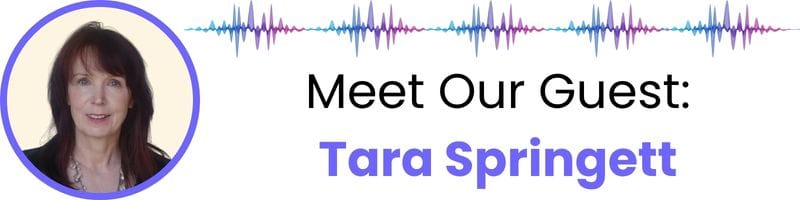
Tara Springett, M.A., is a psychotherapist, Tibetan Buddhist teacher, qigong teacher, and award-winning author of numerous self-help books. Under her guidance, hundreds of clients have regained vitality and moved toward a healthier, more energetic life. Learn more about Tara & her books at taraspringett.com
The Famous “Fake Knee Surgery” Study
Moseley JB, O'Malley K, Petersen NJ, et al. (2002). "A Controlled Trial of Arthroscopic Surgery for Osteoarthritis of the Knee." New England Journal of Medicine, 347(2), 81–88.
Research on How the Placebo Effect Works
Benedetti F. (2008). "Mechanisms of Placebo and Placebo-Related Effects Across Diseases and Treatments."Annual Review of Pharmacology and Toxicology, 48, 33–60.
Kaptchuk TJ et al. (2010). "Placebos without Deception: A Randomized Controlled Trial in Irritable Bowel Syndrome." PLOS ONE, 5(12): e15591.
Levine JD, Gordon NC, Fields HL. (1978). "The mechanism of placebo analgesia." The Lancet, 2(8091), 654–657.
Price DD, Finniss DG, Benedetti F. (2008). "A Comprehensive Review of the Placebo Effect: Recent Advances and Current Thought." Annual Review of Psychology, 59, 565–590.
Wager TD & Atlas LY (2015). "The neuroscience of placebo effects: connecting context, learning and health."Nature Reviews Neuroscience, 16, 403–418
PODCAST HOME